The Framework
Five concepts that shape how we think about organizations, leaders and transformation. Not as academic background — as working lenses.
Each one describes something that sophisticated practitioners already sense but have rarely seen named with this clarity.
Acceleration and Failure Modes
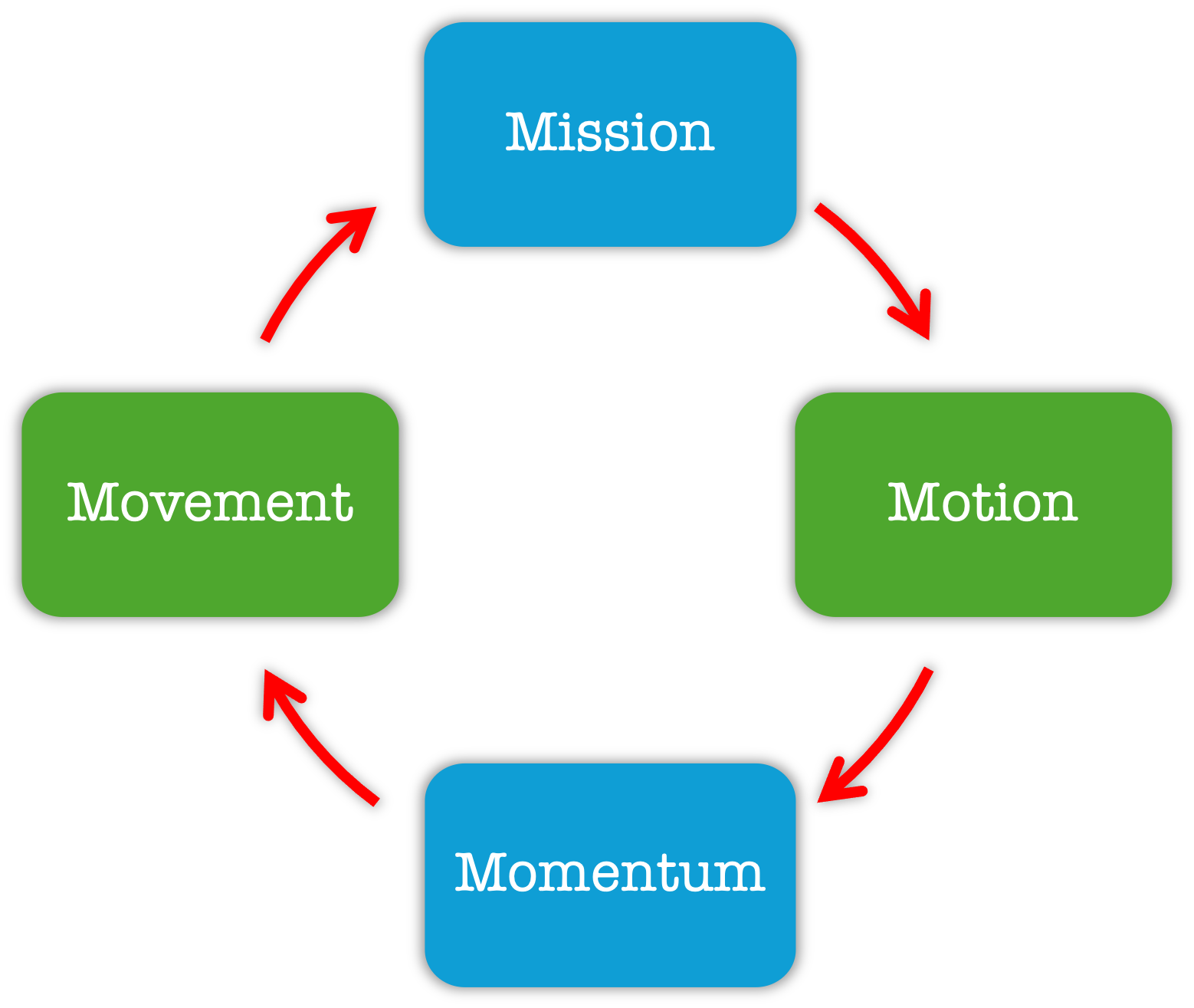
The four terms are not static stages of completion. They are rather fluid phases a system can occupy, while morphing from one to the next phase.
The power lies in the ongoing transition, the inherent acceleration potential and the infinity of a self-referential and self-constituting process.
| Phase of Progression | Typical Failure | Observable Phenomens |
|---|---|---|
| Mission ➞ Motion | Over-idealization | Great Story, no action |
| Motion ➞ Momentum | Over-control | Lots of effort, no echo |
| Momentum ➞ Movement | Fear of losing control | Growth capped, community suppressed |
| Movement ➞ Mission | Nostalgia or rigidity | Movement outgrowth or abandons origin |
Success Factors for Competitive Edge
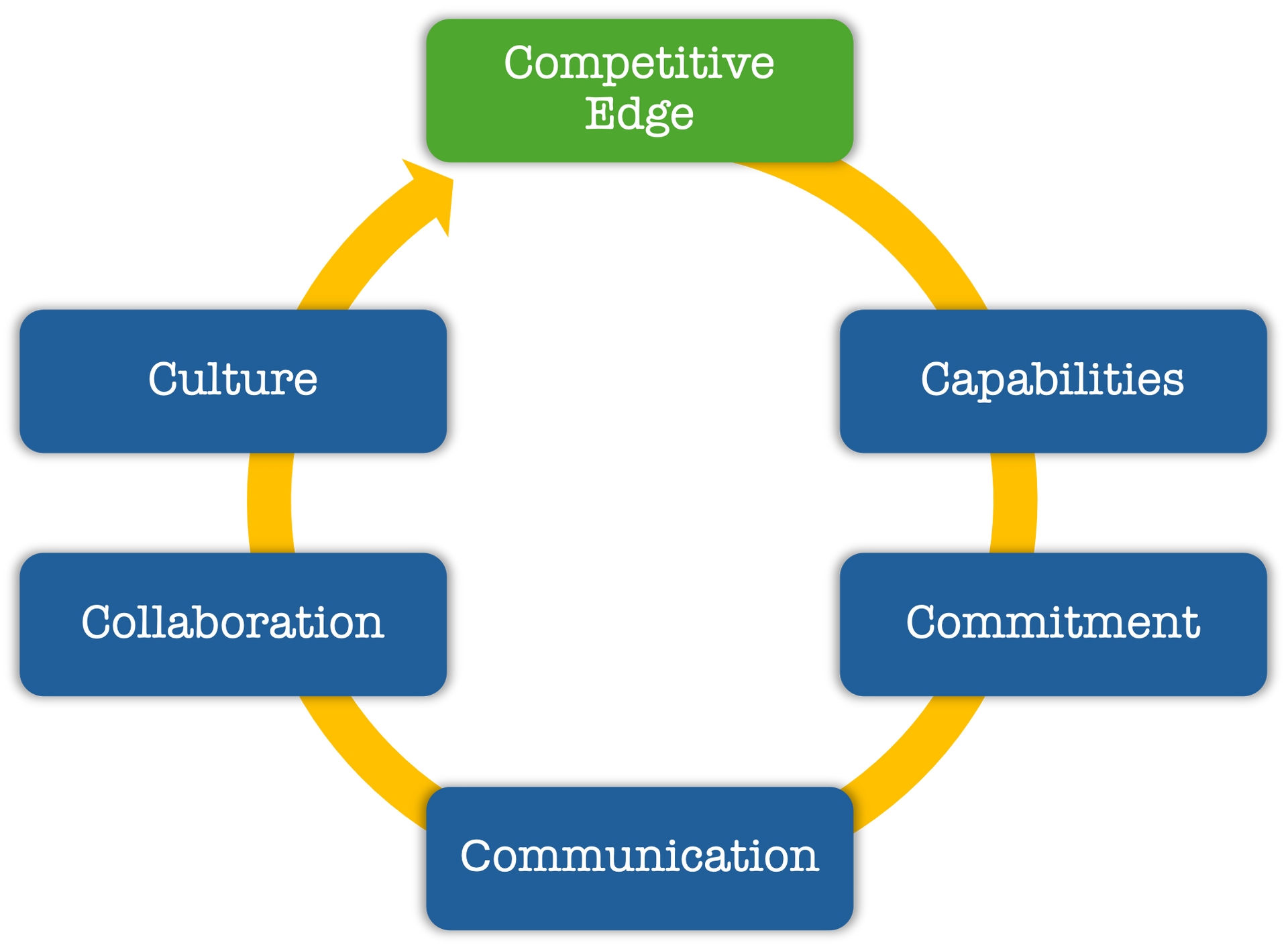
Strategy fails when only some of the conditions for movement are in place. Sustainable competitive edge requires five factors working together — not sequentially, but simultaneously.
- Capabilities enable action.
- Commitment energizes it.
- Communication aligns it.
- Collaboration integrates it.
- Culture sustains it.
These are not independent levers — they are interdependent forces. When one is weak, the others compensate until they can no longer.
The result is not sudden failure but gradual deceleration: the organization keeps moving but loses the capacity to accelerate.
Competitive edge is not a position. It is a systemic condition — one that has to be actively maintained.
Environmental Forces
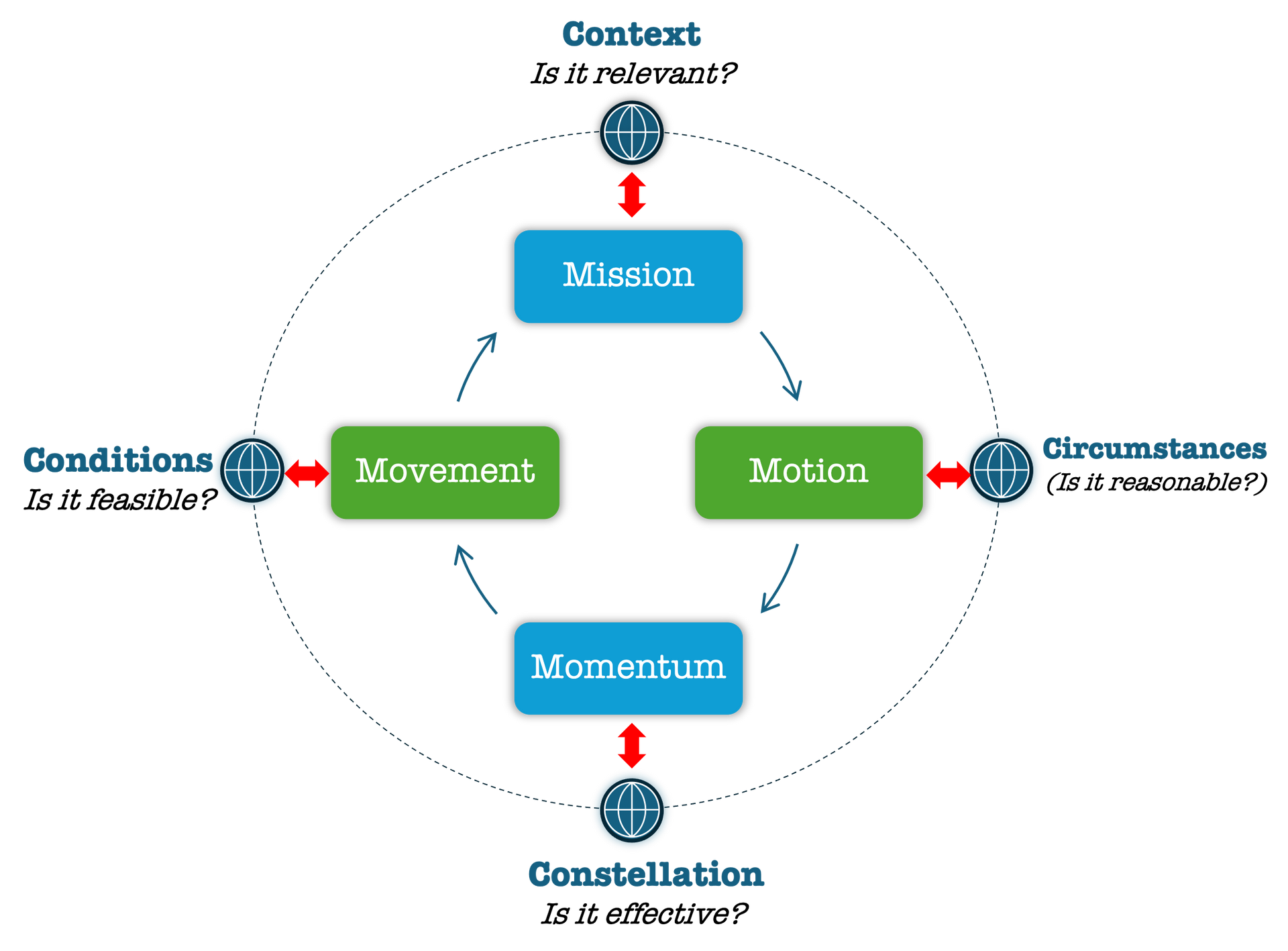
Even the most coherent mission can stall when the environment is not ready for it. Context shapes everything — and is rarely examined with the same rigor as strategy.
Every mission emerges in a specific context: the broader environment it operates in, the immediate circumstances it faces, the constellation of relationships and alliances it depends on, and the conditions — cultural, structural, relational — that either enable or constrain movement.
These four forces are not background. They are active variables. A mission that resonates in one constellation may fail entirely in another.
Understanding your environment with the same precision as your direction is a precondition for real movement.
Fundamental Human Needs
Resistance to change is rarely irrational. It is almost always a signal that something essential — a sense of orientation, belonging or self-worth — is being threatened.
Human behavior in organizations is rooted in four fundamental needs: the need for orientation and control, for belonging and attachment, for self-esteem, and for security and wellbeing.
These needs do not disappear in professional contexts — they shape how people interpret decisions, respond to leadership and engage with change. When they are consistently met, people act with confidence and coherence. When they are unmet, behavior becomes defensive, reactive or withdrawn — regardless of how compelling the strategy is.
Effective transformation works with these needs, not around them.
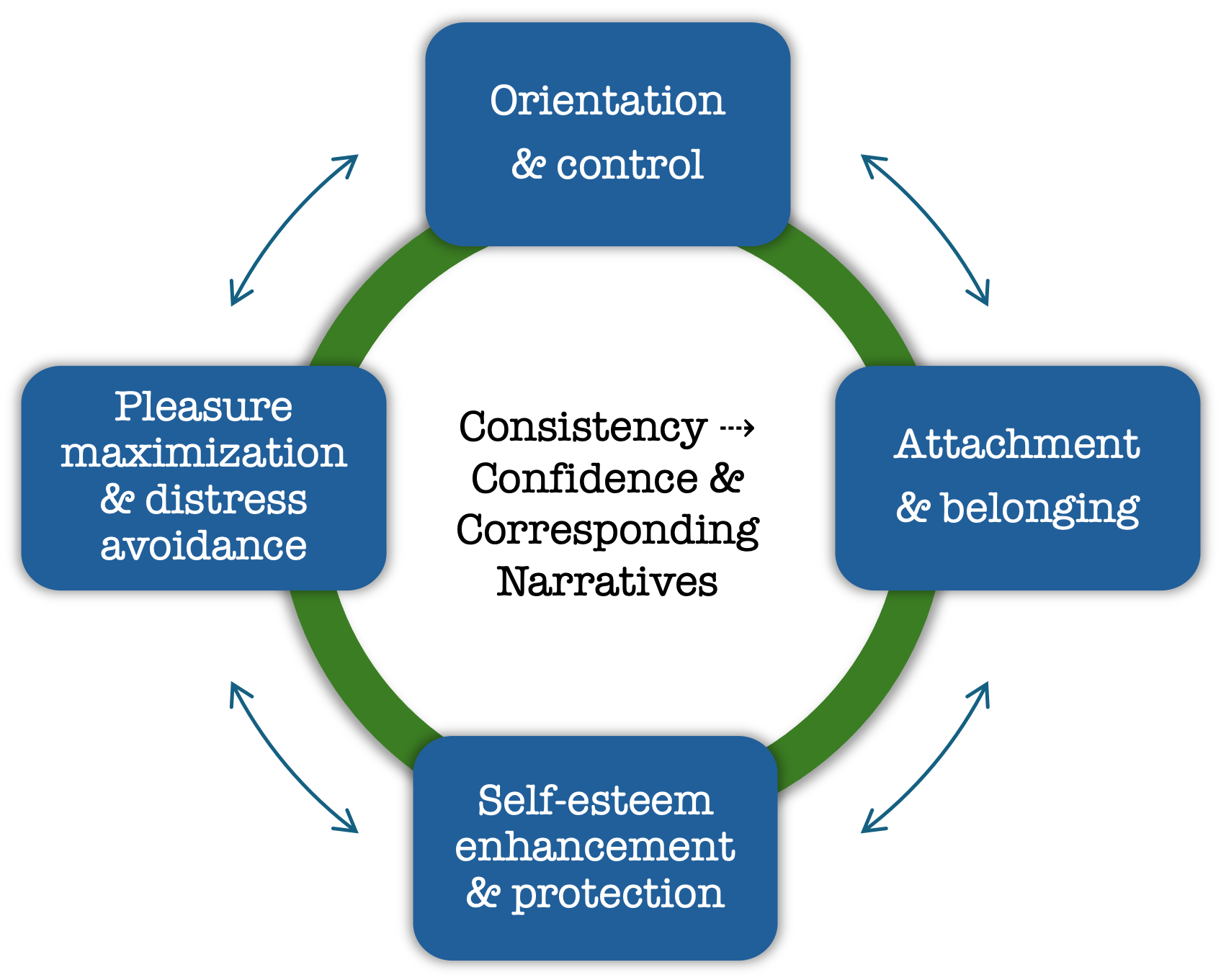
* Klaus Grawe: Psychologischer Therapie. Göttinger 1998. Neuropsychotherapie. Göttingen 2004.
Value Creation Architecture
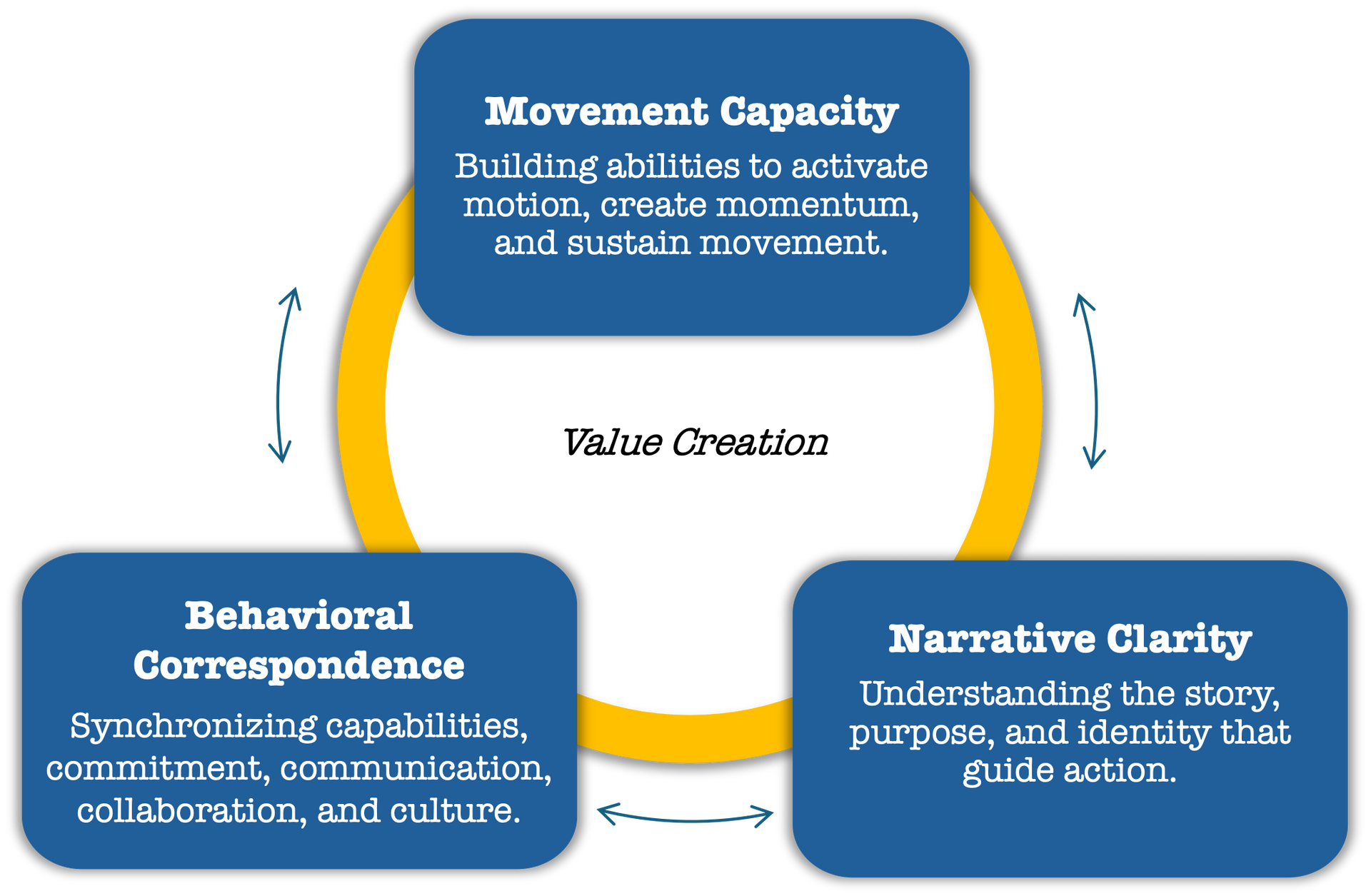
The value of this work is not a report, a workshop or a set of recommendations.
It is something less visible and more durable: the increased capacity of a leader or an organization to navigate complexity, make coherent decisions and sustain movement — independently.
Value, in this sense, is not a deliverable. It is the capacity of a system to accelerate its own progression.
This manifests differently at each level: for the individual leader, it is clearer direction and more stable decisions; for teams, it is faster coordination and less friction; for organizations, it is coherent culture and executable strategy.
What connects all three is the same underlying logic — that movement, once enabled, should become self-reinforcing.
That is what we work toward.
[Placeholder: relevant research data on transformation outcomes to be added]